Reading Over Your Shoulder: The Oldest Hack Still Works in 2025
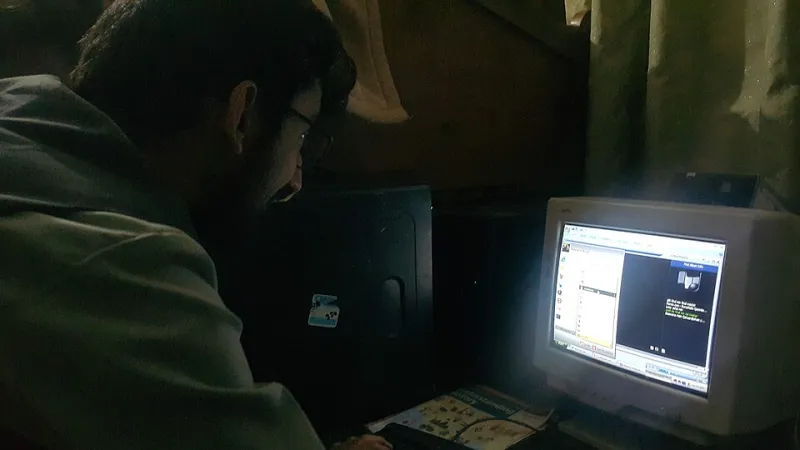
Photo: Kskhh, CC BY-SA 4.0, via Wikimedia Commons
At a bustling espresso bar in downtown Seattle, a reporter for this publication spent an afternoon doing something slightly uncomfortable: watching other people's screens. Not covertly, and not with any intent to use what was seen — just noting how much was visible from a normal seated position two tables away.
The results were humbling. Within forty-five minutes, it was possible to glimpse a full email inbox, someone typing what appeared to be a banking password one character at a time, and a text message containing a six-digit verification code that popped up on a laptop mirrored from a phone. Nobody was sneaking. Nobody was crouching behind a potted plant. All of it was in plain sight, at ordinary viewing angles, under ordinary café lighting.
Shoulder surfing is the low-tech ancestor of modern cybercrime, and it has lost almost nothing to progress.
The Screen Is a Public Document
The term sounds almost quaint, like something from a 1960s espionage manual. But the mechanics have scaled with modern life. Open-plan offices, co-working memberships, airport gate seating designed for density rather than discretion — the American workday now unfolds on displays angled toward rooms full of strangers.
What can be harvested passively? More than most people assume:
- Credentials, typed slowly and visibly into login forms
- Incoming two-factor codes, especially on laptops that mirror phone notifications
- Email content, including invoices, HR correspondence, and client names
- Calendar details, revealing when someone will be out of town
- Document headers — full legal names, account numbers, patient or client identifiers
Security researchers sometimes call the broader phenomenon visual eavesdropping, and studies going back decades have shown that observers can reconstruct typed text from screen reflections, keyboard finger movements, and even the posture of a typist. The techniques don't require skill. They require proximity and patience.
Why Nobody Thinks It Will Happen to Them
There's a psychological asymmetry at work. The person glancing at your screen is aware of the risk; the person displaying the screen usually isn't. Attention narrows under deadline pressure, and a shared workspace becomes invisible background — the same way a frequent flyer stops hearing gate announcements.
There's also a misplaced sense of what attackers want. Many people assume they're too uninteresting a target. But the modern fraud economy runs on volume, not celebrity. A single harvested email login can feed credential-stuffing attempts, business email compromise chains, or identity dossiers assembled from dozens of small leaks. The person typing at the next table doesn't need to be a executive to be useful — they just need to be a stepping stone.
The Attacker Doesn't Need to Be a Stranger
A frequent blind spot: shoulder surfing doesn't require malice from a stranger. Insiders, disgruntled coworkers, and opportunistic acquaintances all operate with better positioning than any outsider. In corporate settings, red-team professionals routinely demonstrate that sensitive material can be photographed across a conference room or read from a shared monitor during an innocent-looking meeting. The report from these exercises is usually the same: nobody thought about the room.
Practical Defenses That Don't Require Paranoia
None of this argues for working in a bunker. The countermeasures are cheap, legal, and mostly habitual:
Privacy filters. A polarizing screen filter narrows the viewing angle so the display goes dark from the side. They cost about as much as a week of café purchases and remain the single most effective physical control.
Positioning discipline. Sit with your back to a wall when handling anything sensitive. It sounds trivial; it eliminates nearly all casual sightlines.
Notification hygiene. Disable message previews on the lock screen, and — critically — stop mirroring phone notifications to your laptop in public. That two-factor code flashing in the corner of a shared screen is the most valuable single item on display.
Delay and context. Reserve password entry, banking, and benefits paperwork for private settings. No login is so urgent it can't wait for an office or a home network.
Keyboard alternatives. On mobile, PIN pads that shuffle digit positions defeat shoulder-surfers more reliably than fixed layouts. Biometric unlock avoids typing anything at all.
Speaking up. In offices, a culture where people feel comfortable saying "let me move" — or asking a colleague to angle a screen during a sensitive call — does more than any memo. Silence is what the technique depends on.
The Broader Lesson
Shoulder surfing is instructive precisely because it's analog. It's a reminder that data security isn't only a software problem. The strongest encryption in the world does nothing about a password read off a screen in a Portland coffee shop. Defenses have to account for the room the device is in, not just the network it's on.
The next time you open a laptop in public, it's worth a five-second scan: who can see this, and what am I about to show them? Most days the answer is harmless. Security, at its core, is about the days it isn't.