Before You Signed the Lease: The Tenant File That Follows You Across State Lines
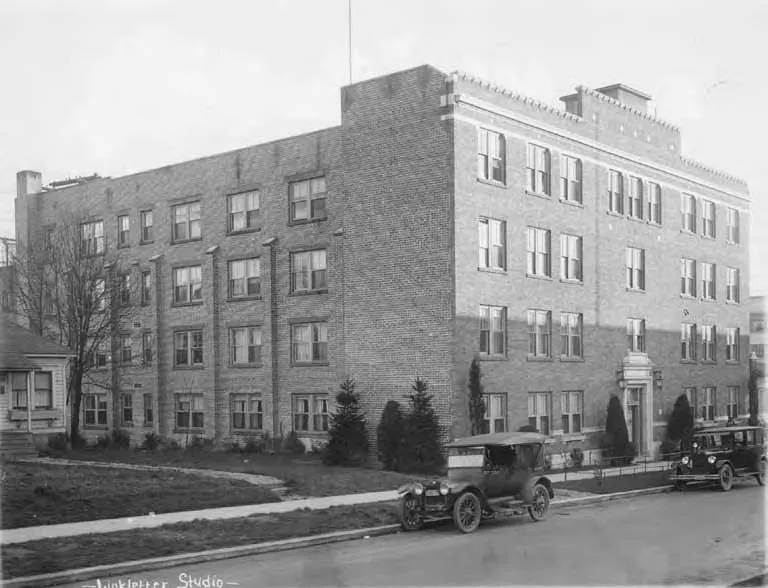
Photo: Unknown authorUnknown author, Public domain, via Wikimedia Commons
When Americans worry about digital privacy, the usual suspects come to mind: the search engine that knows every question, the social platform that tracks every scroll. Few people spare a thought for the company that manages their apartment building. Yet the relationship between a tenant and a property manager generates some of the most intimate data a person will ever surrender — and it flows through an industry that regulators, journalists, and even privacy advocates rarely examine.
The result is a paradox worth sitting with. Google may know what you searched for at midnight, but your property manager knows when your door last opened, how many people sleep in your unit, whether you've argued with a neighbor, and how promptly you reported a leaking faucet. Only one of those companies is bound by a lease agreement and a landlord's practical control over your housing.
What Actually Goes Into a Tenant Dossier
The paper trail begins before move-in. Prospective tenants typically authorize a credit report, a criminal background check, and an eviction history search — often in a single click-through consent form that few applicants read closely. Screening companies aggregate these inputs into a scored report, sometimes with proprietary risk ratings that applicants never see in full.
After the lease is signed, the file keeps growing. Maintenance requests reveal routines: the tenant who reports a broken garbage disposal on Tuesday mornings, the unit where complaints about noise surface after 11 p.m. Payment histories show not just whether rent arrived, but how late, how often, and whether partial payments were negotiated. Some landlords use smart locks and connected thermostats, adding entry logs and occupancy patterns to the mix. In a growing number of professionally managed buildings, package-room cameras, parking permits, and amenity reservations round out a portrait of daily life that would make a data broker envious.
None of this is collected secretly. It is collected incidentally — a byproduct of a contractual relationship that most tenants assume ends when they hand back the keys.
The Retention Question Nobody Asks
How long does all of this stick around? The honest answer is: longer than most tenants expect, and inconsistently across the industry.
Screening reports themselves are governed partly by the Fair Credit Reporting Act, which limits how long most negative information — evictions, judgments, certain records — can appear in consumer reports. But the underlying records held by property managers, applicant-screening vendors, and their subcontractors are a different matter. There is no single federal rule dictating how long a landlord must keep your application file, your maintenance log, or your smart-lock history. Some states have begun to weigh in; most have not.
In practice, retention policies range from a few years to indefinitely, and they are rarely disclosed in plain language. A tenant in Ohio and a tenant in Oregon can hand the same data to the same management company and walk away with different digital shadows, depending on internal policy rather than law.
Why This Corner of the Economy Escapes Scrutiny
Part of the answer is structural. When a consumer-facing tech giant mishandles data, the story writes itself: hundreds of millions of users, a single product, a measurable harm. The rental ecosystem, by contrast, is fragmented across thousands of management firms, hundreds of screening vendors, and a lattice of data-sharing arrangements between them. No single breach or policy makes national news.
There's also an asymmetry of power that muffles complaints. Tenants need housing; housing is scarce and expensive in most American metros. Challenging a management company's data practices — or even asking for a copy of your file — can feel like antagonizing the person who holds your security deposit and your renewal offer. Privacy rights that exist on paper are exercised far less often when the counterparty controls your roof.
Finally, the sector has historically been treated as a landlord-tenant matter, governed by housing law rather than privacy law. That framing made sense in the era of paper ledgers. It makes far less sense when screening reports are generated by national data companies and tenant files are stored in cloud systems shared across portfolios spanning multiple states.
What the File Can Do to You
The stakes are concrete. A screening report with an error — a misattributed eviction, an outdated judgment, a name confused with a relative's — can sink an application before a landlord ever speaks to the applicant. Consumer advocates have documented cases where tenants were denied housing over records that belonged to someone else entirely, and correcting those records can take weeks during which the apartment goes to another applicant.
The data can also leak. Property management companies hold Social Security numbers, bank account details for rent payments, and identity documents copied during applications — precisely the inventory that identity thieves prize. Yet the sector's security practices vary enormously, from institutional-grade systems at large real estate investment trusts to a small firm storing scanned leases on a shared drive.
Reading the Fine Print Before the Front Door
For tenants, a few habits go further than most. Request copies of screening reports after applying — federal law entitles you to them when adverse action is taken, and many vendors will provide them on request regardless. Ask management companies how long they retain records and whether smart-lock logs are kept, and get answers in writing. Freeze or monitor credit reports, since application files are a common source of leaked personal data. And treat maintenance requests and written communications with the awareness that they are records, not casual notes.
None of this requires paranoia. It requires recognizing that the landlord's file cabinet is now a database, and that the person who holds your keys may also hold a more complete picture of your life than any advertising platform ever will.
The lease will end. The file, quite possibly, will not — at least not on any schedule you chose.