The Receipt Remembers: What Your Supermarket Knows Before You Do
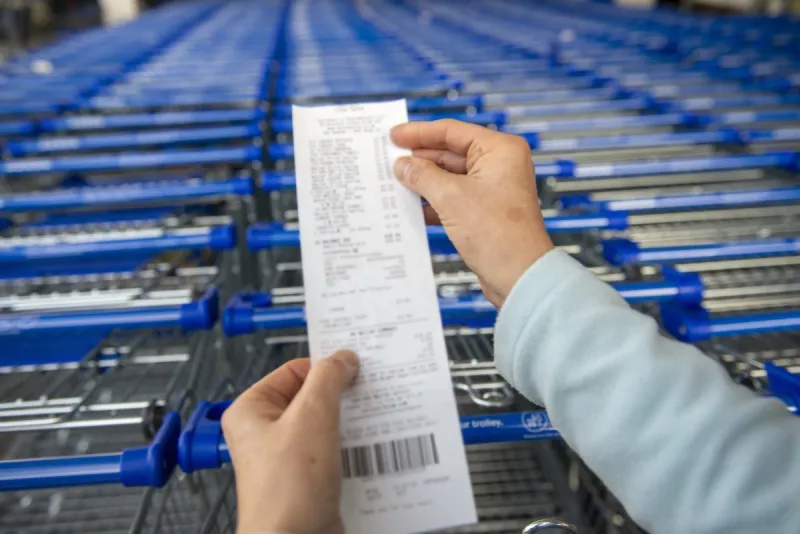
Photo: supermarket checkout loyalty card receipt close-up, via inews.co.uk
The checkout clerk asks for your phone number. You tap in a few digits, the total drops by eleven dollars, and the moment passes. It doesn't feel like a negotiation. It feels like savings.
It is a negotiation — one conducted entirely on the retailer's terms. In exchange for a few cents off cereal, American shoppers hand over one of the most revealing consumer datasets in existence: an itemized, timestamped record of what enters their homes, week after week, year after year.
A Cart Is a Confession
Purchase data is deceptively intimate. A steady stream of nicotine gum followed by an abrupt stop suggests a quit attempt. Switching from regular deodorant to a fragrance-free, aluminum-free alternative hints at a health concern or a cancer scare in the household. Insulin, glucose test strips, prenatal vitamins, gluten-free staples — each item is a data point, and together they sketch a portrait most people would never volunteer on a form.
The most cited example remains the now-legendary case, reported by The New York Times more than a decade ago, in which a Minneapolis-area retailer's analytics could predict a teenager's pregnancy from shifts in her buying patterns — before her family knew. The story made headlines, but the underlying practice never slowed down. If anything, today's analytics are sharper, and the data flows further.
Pharmacy loyalty programs deserve particular scrutiny. A card linked to prescription pickups effectively creates a health profile — one assembled by a retailer, not a medical provider, and therefore outside the protections of HIPAA. That distinction matters more than most shoppers realize.
Where the Data Goes After Checkout
Retailers rarely keep this intelligence to themselves. Loyalty ecosystems typically feed three downstream markets:
Advertisers and retail media networks. Supermarket chains have quietly become advertising businesses. Kroger's data science arm and similar operations monetize shopper insights by letting brands target shoppers with eerie precision — a person who buys pain relievers monthly might see ads for a competing brand, or for services a profile suggests they'll need.
Data brokers. Aggregated and sometimes de-identified purchase segments circulate through the broker economy, where they merge with location, income, and browsing data. De-identification is a weaker shield than it sounds; research has repeatedly shown that a handful of data points can re-identify supposedly anonymous individuals.
Insurers and employers, indirectly. While direct sales of health-inferred data to insurers raise obvious legal and ethical questions, inferences travel. Wellness programs, underwriting models, and marketing for financial products can all be shaped by consumption patterns that correlate with risk.
Why the Discounts Keep People In
The system is sticky by design. Shoppers who object to data collection face a visible penalty: higher prices at the register. Privacy advocates call this a loyalty tax — the difference between the card price and the shelf price functions as the going rate for your behavioral data.
That said, the exposure is not all-or-nothing. A few deliberate habits can shrink the footprint considerably:
- Use a dedicated loyalty identity. Sign up with an alias name, a separate email, and a voice-over-IP number. The card still earns discounts; the profile no longer links cleanly to your legal identity.
- Pay with cash. Card transactions attach names and banks to baskets. Cash keeps the purchase record anonymous even when the card is scanned.
- Skip the pharmacy card. Fill prescriptions under a program that doesn't require enrollment, or ask whether the pharmacist can process loyalty-ineligible purchases. Health data is the most sensitive category in the store.
- Audit your profile. Some retailers allow customers to request a copy of their data under state laws. California, Virginia, and Colorado residents have particularly strong rights to know and delete.
- Opt out of data sharing where offered. It's often buried in account settings or requires an email to a privacy office, but federal and state rules increasingly require retailers to honor these requests.
The Larger Ledger
None of this is inherently sinister in the way a breach or a phishing scheme is. Loyalty programs deliver real value, and data-driven retail has lowered some prices. But the asymmetry deserves honest accounting: shoppers see a coupon; retailers see a longitudinal behavioral dossier. The discount is not the price of the program. It is the payment.
As retail media grows into a multibillion-dollar advertising channel, the incentive to deepen that dossier only increases. The checkout terminal will keep asking for your digits. The more interesting question is what, exactly, you're agreeing to when you provide them — and whether a few dollars off is the rate at which you'd knowingly sell a summary of your household's health, habits, and finances.
Most Americans, if asked directly, would say no. The card in the wallet suggests otherwise.