Front Porch, Full Disclosure: The Doorbell Camera Became the Neighborhood's Most Talkative Witness
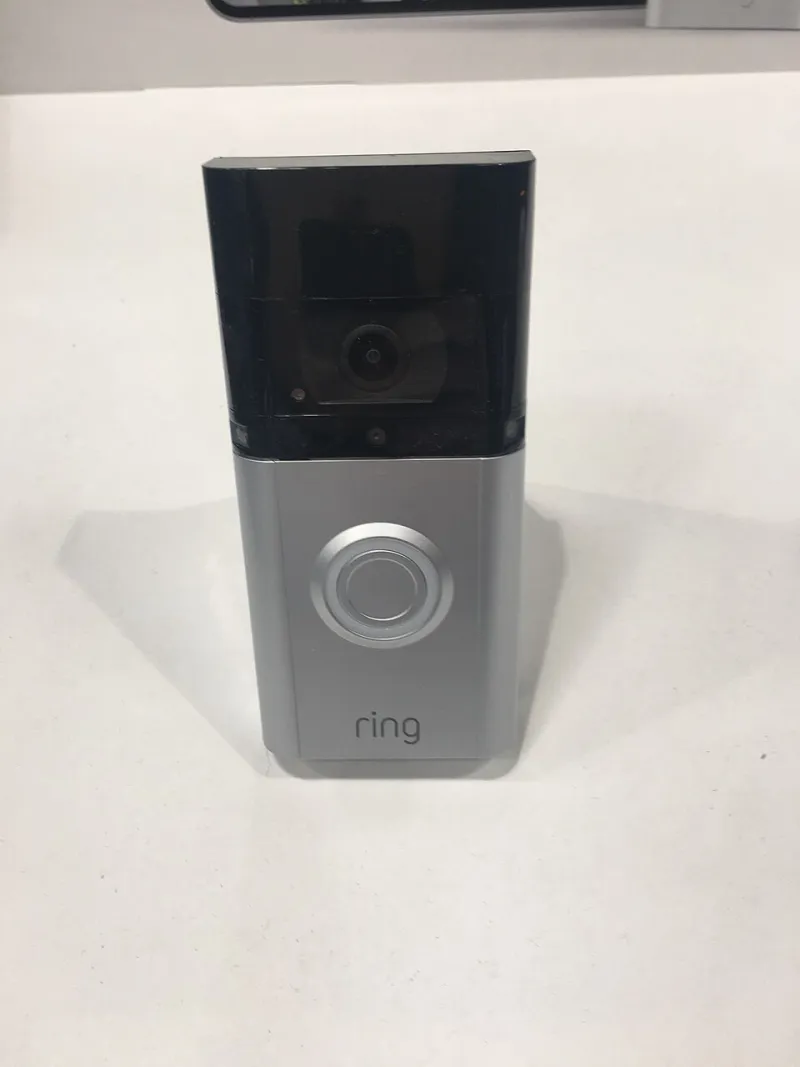
Photo: CrabcakesCreator, CC BY-SA 4.0, via Wikimedia Commons
The video doorbell was sold as a sentinel. A small, weatherproof guardian bolted beside the front door, promising to catch porch pirates in the act and let homeowners screen visitors from the couch. What the marketing rarely mentioned is what the device actually does all day: record everything that passes across the sidewalk, timestamp it, store it in the cloud, and — depending on settings most owners never examine — share fragments of it with a network of neighbors, apps, and government agencies.
In effect, millions of American front porches have been quietly converted into nodes of a distributed surveillance system. Nobody voted for it. Most people never read the terms. But the footage exists, and it says more about a household than its residents may realize.
A Camera With a Civic Life of Its Own
The typical doorbell camera does three things at once. It records motion-triggered clips, it streams them to the owner's phone, and — if the owner enables the option — it feeds selected footage into a neighborhood-facing platform where anyone within a certain radius can view and comment on it.
That third function is where things get complicated. A clip of a delivery driver setting down a package can become, within hours, a thread of speculation about who "looks suspicious" on the block. Researchers who have studied these platforms have documented recurring patterns: footage of strangers — joggers, canvassers, teenagers cutting through a yard — posted with captions that range from mildly wary to openly accusatory. The subject of the video usually has no idea they were recorded, let alone that their image is now the subject of a neighborhood debate.
The privacy implications run in both directions. The homeowner who posts footage assumes their camera is an extension of their property rights. The pedestrian captured on it never consented to appearing in a semi-public feed. American law, which evolved long before consumer cameras were cheap enough to blanket a subdivision, has not fully caught up with this tension.
When the Badge Requests the Footage
Law enforcement's interest in doorbell footage is well established and, in many cases, entirely lawful. Investigators routinely canvass neighborhoods after a crime, asking residents to voluntarily share clips. Some camera manufacturers have built formal portals through which police departments can request footage directly from users, with the user's consent required in most cases. Others have faced scrutiny — and in some instances regulatory pushback — over how easily authorities could obtain recordings.
The distinction matters. A voluntary handover after a burglary is one thing. A standing pipeline between a private company's cloud and a government database is another. Privacy advocates have pressed manufacturers and municipal police departments for transparency about how often footage is requested, how warrants factor in, and whether residents are notified when their recordings become evidence. The answers, where they exist at all, tend to be buried in transparency reports few residents ever read.
Homeowners who want to understand their own exposure should know the general shape of the rules: police generally need a warrant to compel footage held by a company, but can simply ask the owner directly, and an owner can hand over their own recordings without any warrant at all. The camera on the door is legally the owner's camera — which means the owner is also its gatekeeper, and its liability holder.
The Casers Get a Feed Too
Not everyone watching the neighborhood feed has good intentions. Security researchers and law enforcement alike have noted that the same clips meant to deter theft can serve as reconnaissance. A posted video showing exactly when packages arrive, which homes have visible cameras, and which doors face away from the street is, to a patient thief, a delivery schedule and a security audit delivered free of charge.
There is an irony here that deserves to be stated plainly: the device bought for security can leak the very information that undermines it. A homeowner who posts "my camera caught this guy at 2:15 PM" has just told the whole platform when the house is being watched, when deliveries land, and how long the owner takes to answer the door.
What Owners Can Actually Do
The situation is not hopeless, and it does not require ripping the doorbell off the wall. A few deliberate settings changes go a long way:
- Audit the sharing defaults. Most platforms default to broad sharing. Narrow the audience, disable automatic uploads to community feeds, and review what has already been posted.
- Frame the lens deliberately. A camera angled at the door and porch captures far less of the sidewalk and neighbors' property than one angled for maximum coverage — and creates fewer disputes with people who object to being recorded.
- Know your local recording laws. Several states restrict recording audio or capturing areas where people have a reasonable expectation of privacy. A camera pointed into a neighbor's yard can create legal exposure for the owner, not just the subject.
- Check retention and deletion. Many services store clips far longer than owners assume. Deleting old footage and shortening retention windows shrinks the archive available to anyone who comes asking later.
- Think before posting. A clip of a stranger doing nothing illegal is not evidence of anything. Uploading it to a neighborhood feed can escalate ordinary movement into unfounded suspicion — and has, in documented cases, fueled harassment of innocent people.
The Watchman Who Never Sleeps, and Never Forgets
There is a version of the doorbell camera that serves its owner well: a narrow, purposeful lens that deters theft, answers the door remotely, and discards what it does not need. There is another version that functions as an always-on witness, archiving the comings and goings of a neighborhood and distributing them to whoever asks nicely enough.
Which version sits above the doorbell is not decided by the manufacturer. It is decided by a handful of settings, a few minutes of attention, and a basic question every owner should ask before enabling one more toggle: who else is going to see this? The device was bought to watch the porch. Making sure it does not end up watching the owner instead is the part of home security that no one puts on the box.