The Skeleton Key Hiding in Plain Sight: Security Questions and the Accounts They Still Unlock
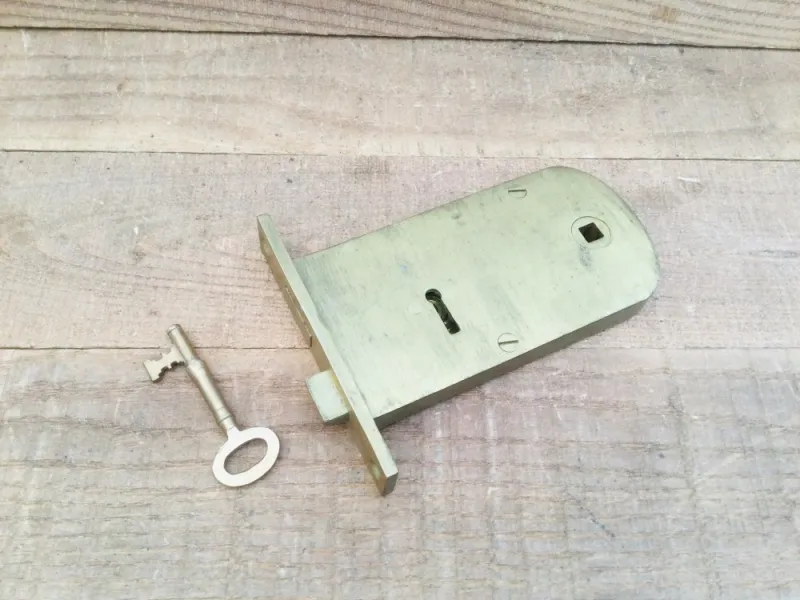
Photo: vintage brass key under doormat front door, via sites.create-cdn.net
The password gets all the attention. Breach notifications mention it, password managers exist for it, and federal guidance spends pages on length and complexity. But in a surprising number of account takeovers investigated by regulators and security researchers, the password was never the problem. The way in was a question — one the account holder answered truthfully years ago and forgot they'd ever been asked.
The Answers Are Already Public
Security questions were designed for a world without search engines. A mother's maiden name, the street where you grew up, the name of your first pet — these were presumed private, known only to family and close friends. That presumption collapsed sometime around the mid-2000s and has been eroding ever since.
Consider what an ordinary American's digital footprint contains. Ancestry platforms and public genealogy indexes make maiden names trivially findable. Zillow and county assessor records tie names to addresses, past and present. Yearbooks have been digitized. High school mascots appear in alumni Facebook groups. A motivated stranger with an hour and no special tools can assemble a dossier that answers most of the standard question bank — not by hacking anything, but by reading.
Data breaches compound the problem. When a credit bureau or a retail chain loses records, the exposed fields often include exactly the datapoints security questions rely on: birthplaces, prior addresses, phone numbers going back decades. Unlike a password, which a user can rotate after a breach, the street you grew up on cannot be changed. It is a permanent credential that was never meant to be one.
Why Institutions Won't Let Go
Given all this, the persistence of security questions looks inexplicable. The reasons are bureaucratic rather than technical.
For banks, insurers, and healthcare portals, knowledge-based verification is woven into compliance frameworks, call-center scripts, and legacy identity systems that predate modern authentication. Replacing it means re-certifying processes, retraining staff, and migrating mainframe-era records — costs that rarely win budget battles against threats that feel abstract until they arrive.
There is also a legal comfort to it. If an institution can show that a caller answered the verification questions, it has a defensible record that it performed due diligence. The fact that the answers were guessable or purchasable is a harder argument to make in a boardroom than the presence of a checkbox. The question bank functions less as a lock than as a liability shield.
Regulators have noticed. The National Institute of Standards and Technology has discouraged knowledge-based authentication in its digital identity guidance for years, noting that the answers are frequently available to attackers. Yet guidance is not mandate, and adoption lags wherever legacy systems rule.
When the Question Becomes the Weapon
The consequences show up in court records and state attorney general complaints with uncomfortable regularity.
In one pattern seen repeatedly in wire-fraud cases, scammers gathered personal details from social media and public records, called a bank's customer service line, and passed verification by answering security questions — then changed the email address and phone number on the account, locking out the real owner while initiating transfers. No password was cracked. No malware was installed. The static questions were the entire attack surface.
Estate and probate fraud follows a similar script. When someone dies, obituaries — often rich with family names, hometowns, and life histories — become a roadmap to the deceased's accounts, whose security questions were answered decades ago and never revisited. Grief, as this publication has documented before, is a harvest season for fraudsters, and unrotatable credentials are low-hanging fruit.
Healthcare portals present their own variant. Because medical records are valuable for identity theft and insurance fraud, attackers who can pass a portal's knowledge-based check gain access to prescription histories, diagnoses, and insurance identifiers — data that cannot be replaced with a new credit card number.
What Users Can Do While Institutions Catch Up
The advice here is counterintuitive: lie. When a site forces you to answer security questions, treat the answers as additional passwords, not as facts. Choose responses that are memorable to you but unverifiable from public records — a random word stored in a password manager, a fabricated pet, a city you've never lived in. The system cannot check your honesty; it only checks consistency.
A password manager solves the memory problem neatly, since the answers can be stored alongside the credentials they protect. Where passkeys or hardware-based two-factor authentication are offered, enabling them reduces the security questions to a backstop rather than a primary gate.
For accounts belonging to elderly relatives or recently deceased family members, the stakes are higher and the timelines tighter. Verifying that recovery channels are current, and that security questions aren't answerable from an obituary, is unglamorous work that prevents some of the most painful fraud cases on record.
The Question That Should Be Asked
Security questions survive not because they work but because nobody with authority has been forced to account for their failure. Until regulators or litigation change that calculus, the burden falls on individuals to treat these questions as what they have become: one more credential to generate, store, and guard — never a truth to be told.
The key under the mat was always a bad idea. The trouble is that America's banks, hospitals, and agencies never picked it up.