Pump and Circumstance: A Commuter's Field Guide to Spotting Card Skimmers at the Fuel Station
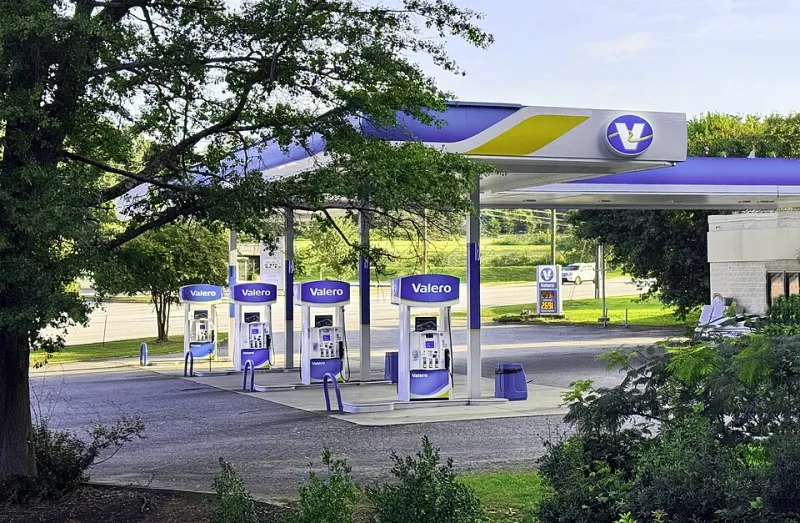
Photo: Harrison Keely, CC BY 4.0, via Wikimedia Commons
Every American who drives knows the ritual. You pull into a station off the interstate, feed the pump your card, and ten minutes later you are back on the highway thinking about anything but the transaction. Fraud investigators wish you thought about it a little more — not obsessively, just enough to notice when something about the card reader looks wrong.
Card skimming — the practice of attaching a covert reader over or inside a payment terminal to harvest card data — remains one of the most durable low-tech threats in the fraud landscape. While headlines chase ransomware and data breaches, skimmers quietly generate losses estimated in the hundreds of millions of dollars annually across the United States, with fuel pumps and standalone ATMs serving as the favored venues.
Why Gas Stations Became the Front Line
The logic from the criminal perspective is straightforward. A fuel pump sits outdoors, unattended for hours, and serves a steady stream of drivers who are often in a hurry. Older pumps are frequently opened with generic keys that were never changed after installation. A skimmer fitted inside the pump's card reader housing can collect magnetic-stripe data for days before anyone notices.
The economics work in the criminal's favor, too. Unlike a phishing email, which must trick a victim one at a time, a single skimmer on a busy highway pump might capture dozens of cards per day. Investigators in states along major freight corridors — Florida, Texas, California, and the Interstate 95 corridor in particular — report recovering skimmers by the hundreds during coordinated sweeps.
County sheriffs' offices have responded with their own ritual: periodic skimmer inspections at every station in the county, often using Bluetooth scanners to detect the wireless transmitters many skimmers use to offload stolen data without the thief ever returning to the pump. Some departments now publish the results, listing which stations came up clean and which produced a seizure.
The Two-Minute Inspection
You do not need a badge or a scanner to dramatically reduce your risk. Fraud investigators consistently point to a short checklist that takes less time than washing your windshield.
Tug before you tap. External skimmer overlays — the ones glued or clipped over a card reader — are designed to survive casual contact, not a deliberate pull. Grab the card reader housing and the PIN pad and give them a firm wiggle. Anything that shifts, rattles, or comes loose was not installed by the station.
Compare across the pump bank. If a station has six pumps, look at the card readers as a set. One reader that sits at a different angle, has a mismatched color, shows a worn or cracked seam, or features a sticker seal that has been broken is the outlier worth avoiding.
Check the security seal. Many stations now apply serialized tape seals over pump cabinets. If the seal is torn, peeling, or shows signs of having been lifted and replaced, notify the attendant. Some states require these seals on every dispenser.
Favor the pump closest to the attendant. Investigators note that skimmers disproportionately appear on pumps farthest from the store windows and cameras — the ones a thief can service with the least chance of being seen.
Cover your PIN. At ATMs especially, a tiny pinhole camera positioned above the keypad is a common companion to a card reader overlay. A free hand shielding the keypad defeats it entirely.
What the Chip Actually Protects — and What It Doesn't
A common misconception deserves correction: EMV chip cards were designed to protect the transaction, not the card's data in transit. A skimmer can still read the magnetic stripe on the back of a chip card if the terminal falls back to stripe processing — which many fuel pumps did for years under regulatory grace periods.
That gap is closing. The payment networks' liability shift for automated fuel dispensers, which took effect in recent years, made stations financially responsible for fraud occurring on non-chip-capable pumps. The result has been a rapid retrofit of chip readers into pump terminals nationwide, and a corresponding shift in criminal tactics toward older ATMs and non-compliant terminals.
The broader industry answer is moving verification outward from the card itself. Contactless payments generate a single-use cryptographic token for each transaction, meaning data captured by a skimmer is largely useless for counterfeiting. Financial institutions increasingly pair this with real-time location analysis — flagging a card presented at a terminal hundreds of miles from where the physical card last appeared. Analysts sometimes describe this architecture as chip-to-cloud verification: the credential is validated continuously by the issuer rather than trusted blindly by the terminal.
When You Find Something
If a reader feels loose or looks tampered with, do not remove it yourself and do not confront anyone. Investigators caution that some skimmer crews have looked to hardware and Bluetooth signals to detect tampering remotely, and removal can destroy evidence. Instead, step inside, tell the attendant, pay inside or at a different pump, and call the non-emergency line of the local sheriff or police department. If you suspect your card was already compromised, report it to your bank immediately — federal consumer protections generally cap liability when unauthorized charges are reported promptly, and institutions can reissue a card within days.
The Bigger Picture
Skimming persists not because it is sophisticated but because it is cheap, scalable, and exploits a moment of inattention that every driver has experienced. The countermeasures — tap-to-pay adoption, pump retrofits, Bluetooth-detection sweeps — are steadily raising the cost of the crime. Until the hardware catches up everywhere, the most effective fraud-prevention device on the highway remains a driver willing to spend ninety seconds looking at the machine before trusting it with a card.